
Table of Contents
- The End of Rigid Software Logic
- Why Complexity Broke Traditional Workflows
- Understanding Generative AI Agents
- Automation Gains Intelligence
- Vibe Coding and System-Level Thinking
- Agentic Workflows in Real Organizations
- Skills Employers Actually Look For
- Choosing the Right AI Program in Dubai
- The Future of Hybrid Intelligence
- Final Perspective
The End of Rigid Software Logic
For decades, software development followed a predictable structure. Engineers defined rules, mapped conditions, and hardcoded responses for every scenario they could anticipate. This approach created reliable systems, but it also locked software into static behavior. As long as inputs stayed within expected boundaries, systems worked well. Once reality deviated, friction appeared.
Modern digital environments no longer behave predictably. User intent is ambiguous, data is incomplete, and business logic evolves continuously. In this context, rigid software logic struggles to scale. It requires constant maintenance, growing development teams, and slow iteration cycles.
This breakdown is one of the primary reasons interest in the Best Applied Generative AI & Automation Program in Dubai has grown rapidly. Learners are no longer satisfied with writing code that only executes instructions. They want to build systems that can reason, adapt, and operate with greater autonomy.

Why Complexity Broke Traditional Workflows
Traditional workflows were designed for linear processes. One action followed another in a fixed sequence. This model worked when tools were limited and organizational processes were stable.
Today, most workflows span multiple platforms, teams, and data sources. A single customer request might involve CRM systems, analytics tools, internal approvals, and external services. Managing this complexity through static logic quickly becomes unsustainable.
As exceptions grow, systems become fragile. Teams spend more time maintaining workflows than improving outcomes. This shift has forced organizations to rethink how software should behave, opening the door to agentic systems and intelligent automation.
Understanding Generative AI Agents
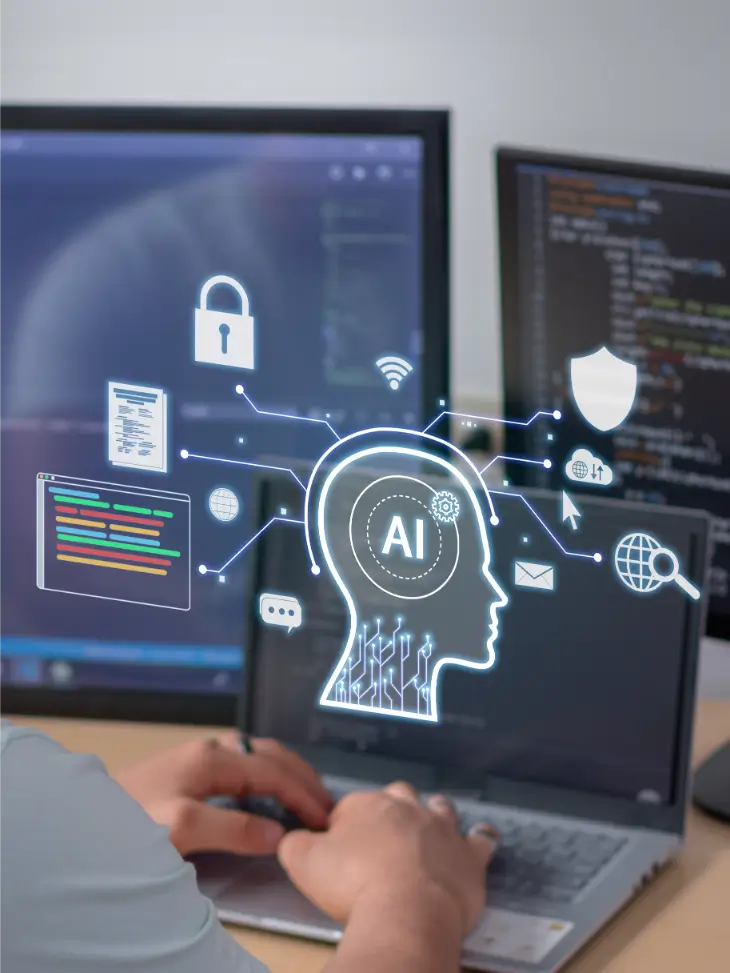
Generative AI agents represent a new layer in software architecture. Unlike traditional programs, agents operate with goals rather than predefined paths. They interpret context, decide on actions, and use tools dynamically to achieve outcomes.
An AI agent can analyze a request, break it into steps, retrieve relevant information, and execute actions across systems. Importantly, it can also recognize uncertainty and escalate to humans when needed.
This distinction explains the growing search interest around the Best AI Agents Course in Dubai. Learners want to understand not just how to use AI tools, but how to design agentic systems that behave responsibly in real-world environments.

Automation Gains Intelligence
Automation has existed for years, but its role has changed dramatically. Earlier automation focused on simple triggers and linear execution. These workflows reduced manual effort but lacked flexibility.
When automation is combined with Generative AI, it becomes adaptive. The AI component handles interpretation and decision-making, while automation ensures consistent execution. Together, they form systems that can respond to nuance rather than rigid conditions.
This evolution is central to many of the Best AI Courses in Dubai, particularly those emphasizing applied learning and system deployment rather than surface-level tool usage.
Vibe Coding and System-Level Thinking
Vibe coding reflects a broader shift in how software is built. Instead of writing every line of logic manually, developers describe intent, constraints, and desired outcomes. AI systems generate code, workflows, and interfaces based on these descriptions.
This does not remove the need for engineering skill. It changes where that skill is applied. Developers focus more on architecture, validation, and system behavior than on repetitive implementation tasks.
Learners enrolled in the Best Applied Generative AI & Automation Program in Dubai often report that this mindset shift is as valuable as the technical skills themselves. They begin to think in terms of systems rather than scripts.
Agentic Workflows in Real Organizations
Agentic workflows are already being deployed across industries. These systems combine AI reasoning with automation execution to manage complex processes.
Key characteristics of effective agentic workflows include:
Intent Understanding Layer
The system interprets user requests, clarifies ambiguity, and determines the underlying goal rather than reacting to keywords.
Dynamic Planning Capability
Based on intent, the agent decides which steps are required and in what order, adjusting plans as conditions change.
Tool and System Integration
Agents interact with APIs, databases, and automation platforms to execute tasks across multiple environments.
Human Escalation Logic
When uncertainty or risk exceeds thresholds, the system pauses and involves a human decision-maker.
These elements are rarely taught in introductory programs. They are core to vocational, outcome-driven training offered by the Best Vocational Institute in Dubai focused on AI.
Skills Employers Actually Look For
As organizations adopt AI-driven workflows, hiring criteria are shifting. Employers are less impressed by isolated tool knowledge and more interested in system-level competence.
High-demand capabilities include:
Agent Design Fundamentals
Ability to structure goals, memory, and decision logic so agents behave predictably and safely across scenarios.
Workflow Orchestration Skills
Understanding how automation platforms connect systems, manage dependencies, and ensure reliable execution.
Evaluation and Monitoring
Designing feedback loops to measure system performance, detect failure modes, and guide continuous improvement.
Applied Product Judgment
Knowing when automation adds value and when human involvement is necessary to maintain trust and quality.
This distinction explains why learners carefully compare the Best AI Courses in Dubai rather than choosing based on branding alone.
Choosing the Right AI Program in Dubai
Dubai has become a major hub for AI education and career growth. With this growth comes a wide range of programs, varying significantly in depth and outcomes.
When evaluating the Best Applied Generative AI & Automation Program in Dubai, learners should look beyond course outlines and focus on execution.
Programs that stand out typically emphasize real integrations, production-level projects, and portfolio outcomes. They align closely with employer expectations and prepare learners for real-world complexity.
This vocational orientation is what many professionals mean when they search for the Best Vocational Institute in Dubai offering AI training.
The Future of Hybrid Intelligence
The future of software is not fully autonomous systems operating without humans. Instead, it is hybrid intelligence.
Humans define objectives, constraints, and ethical boundaries. AI agents interpret intent and plan actions. Automation executes reliably at scale. Together, these elements create systems that are faster, more resilient, and more aligned with human goals.
Builders who understand this balance will shape the next generation of digital products.

Final Perspective
Traditional software workflows are being replaced not because they failed, but because the world outgrew them. Generative AI agents and intelligent automation offer a way forward that matches modern complexity.
For learners exploring the Best AI Courses in Dubai, this shift should guide decision-making. Programs that teach systems, deployment, and judgment will matter far more than those focused only on tools. The future belongs to builders who can design intelligence, not just write code.