AI training for teachers should do more than introduce a collection of prompts. The real objective is to help educators design stronger learning experiences, reduce avoidable administrative work, evaluate AI output critically and make responsible decisions about when technology should and should not be used.
Table of Contents
- Why AI literacy matters for educators
- What teachers should learn
- Practical classroom and academic applications
- Responsible use, privacy and human judgement
- What effective faculty development looks like
- Innova’s educator training format
- Choosing the right programme
- Frequently asked questions
Why AI literacy matters for educators
Generative AI is changing how learners research, draft, revise and present work. It is also changing how teachers prepare lessons, create assessments and organise routine tasks. Educators therefore need two capabilities at the same time: the confidence to use helpful tools and the judgement to recognise inaccurate, biased, unsuitable or unsafe output.
An AI-literate teacher does not outsource teaching to a system. The teacher defines the learning objective, selects an appropriate method, reviews every output and remains accountable for accuracy, safeguarding and student development.
What teachers should learn
A well-designed programme begins with fundamentals: what generative AI can do, how models produce responses, why confident output can still be wrong and where automation differs from creative assistance. It should then move into AI thinking, prompt engineering, workflow design, privacy, ethics and the evaluation of generated material.
Teachers should practise creating and refining instructions, not memorising prompt formulas. They should learn to give context, define the intended learner level, specify constraints, request a structured output and test the result against a rubric or trusted source.
Practical classroom and academic applications
Useful applications include lesson-plan ideation, differentiated reading material, quiz and rubric drafting, examples for classroom discussion, presentation outlines, mind maps and student-feedback drafts. Educators can also explore research support, data organisation and the preparation of administrative communication.
Innova’s live educator material highlights lesson design, assessments, research content and student feedback. Its existing articles also cover curriculum design, interactive activities, grading support, scheduling, research and data analysis. These uses belong within a supervised workflow. A teacher might ask AI for three reading levels on the same concept, then check vocabulary, cultural relevance and factual accuracy before use. A faculty member might generate a draft rubric, then align it with actual learning outcomes and institutional policy.
AI can also support institutional work. Academic coordinators can explore curriculum mapping, recurring communication, department planning and resource development. Leaders may use training sessions to build a shared language around acceptable use instead of leaving every educator to invent an individual policy.

Responsible use, privacy and human judgement
Educators should avoid entering identifiable learner data, confidential records or protected institutional information into tools unless an approved policy and secure environment permits it. Training should cover anonymisation, source verification, bias, copyright awareness and the need to disclose AI use when required.
Assessment requires special care. AI can help draft questions or identify patterns in anonymised work, but it should not make unsupported decisions about a learner. Human review remains essential for fairness, context and accountability.
What effective faculty development looks like
Generic demonstrations are rarely enough. A classroom teacher, school leader, academic researcher and university administrator have different needs. Effective faculty development uses role-specific cases, guided practice, peer discussion and a small implementation task that participants can take back to their institution.
The original Innova articles consistently emphasise mentorship, hands-on workshops and practical application. Those elements are most useful when the output is concrete, such as an AI-supported lesson sequence, assessment resource, research workflow or departmental implementation plan.

Innova’s educator training format
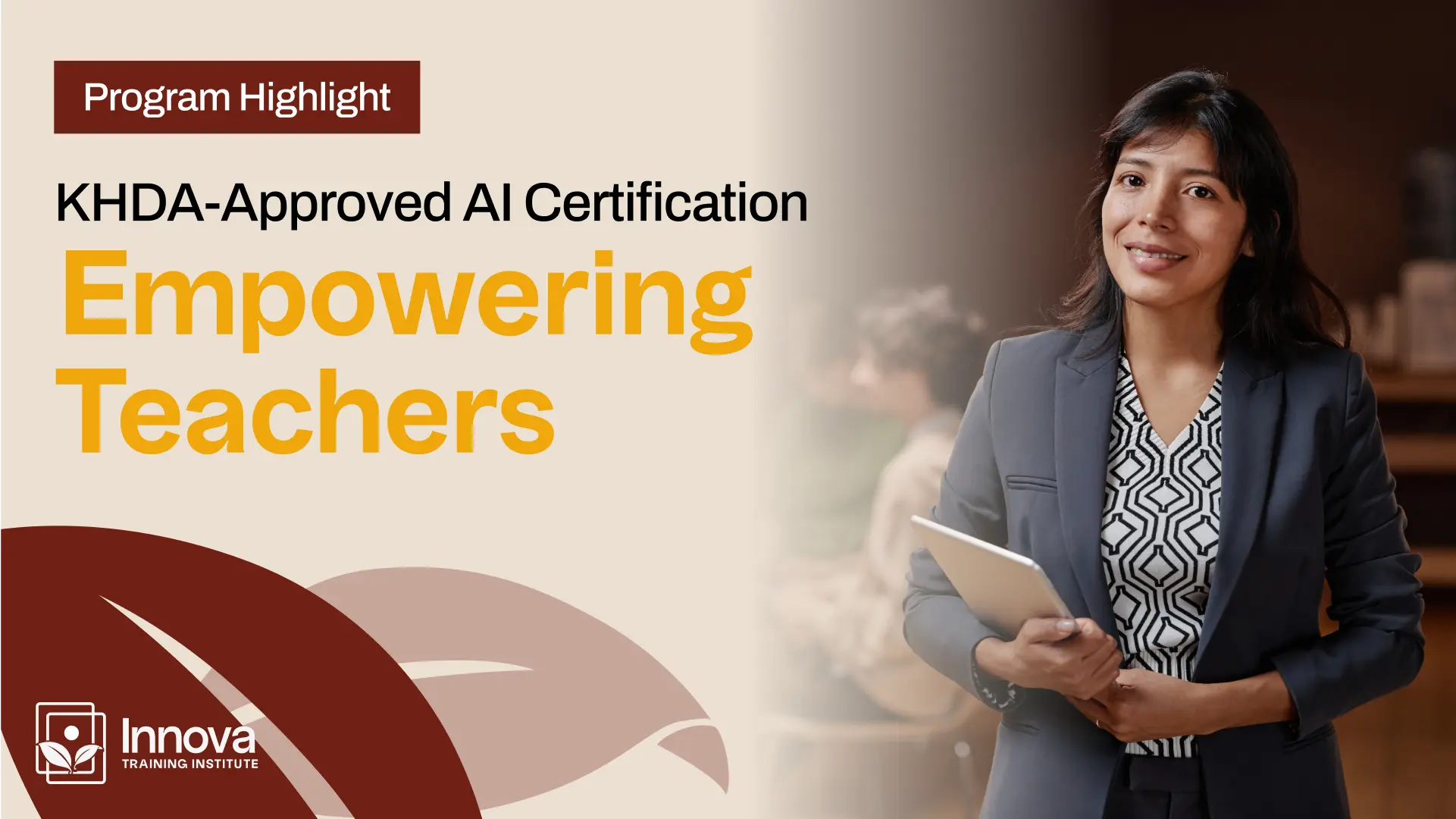
Innova’s current AI Faculty Development Programme page presents a compact workshop lasting three hours across two sessions of approximately one hour and fifteen minutes each. The supplied programme material focuses on AI fundamentals, AI thinking, prompt engineering, mind maps, data privacy and responsible academic use.
The intended outcomes include improved confidence with AI tools, more efficient routine work, enhanced teaching and learning experiences, stronger creativity and access to reference material. The programme is designed for practical adoption rather than coding. Institutions seeking a customised version should ask how examples can be aligned with their subjects, learner age groups, internal policies and approved technology stack.
Choosing the right programme
Ask whether the programme includes live practice, review of weak AI outputs, privacy and ethics, subject-specific examples and a final implementation activity. Confirm the duration, delivery mode, trainer profile, certification and current approval status. Schools should also ask whether staff receive reusable reference resources and post-session support.
For an individual teacher, a short workshop may be a good introduction. A department planning wider adoption may need a multi-session programme with policy discussion, workflow design and follow-up review.
Frequently Asked Questions
Do teachers need coding skills for AI training?
Most introductory educator programmes do not require coding. Digital confidence, curiosity and willingness to test and review outputs are more important.
Can AI create complete lesson plans?
It can create a draft, but a teacher must align it with curriculum goals, learner needs, timing, resources, safeguarding and assessment requirements.
Is AI training mandatory for teachers in Dubai?
Requirements can vary by institution and policy context. Educators should check current guidance from their employer and relevant authority.
What should a school receive from faculty AI training?
Useful outcomes include common principles, approved use cases, sample workflows, privacy guidance, reusable teaching resources and an implementation plan.
Want to bring responsible, practical AI use into your classroom or institution? Review Innova’s AI Faculty Development Programme and request the current workshop and certification details.