Table of Contents
- The Difference Between Images and Stories
- Why AI Visuals Often Lack Meaning
- Filmmaking Theory as Narrative Infrastructure
- Composition, Camera, and Emotional Control
- Rhythm, Pacing, and Visual Continuity
- Applying Theory to AI-Generated Content
- Skills Required for Cinematic AI Storytelling
- Choosing the Right AI Filmmaking Course in Dubai
- The Future of Theory-Led AI Cinema
- Closing Reflection
The Difference Between Images and Stories
An image can be beautiful without saying anything. A story, however, requires intention, progression, and emotional logic. This distinction becomes critical when working with AI-generated visuals.
Modern AI tools can generate striking frames on demand. Yet without narrative direction, these frames exist in isolation. They do not guide the viewer, establish stakes, or build emotional momentum. Understanding this gap is essential for anyone pursuing serious creative work through the Best AI Courses in Dubai.

Why AI Visuals Often Lack Meaning
AI models are trained to predict visual patterns, not narrative outcomes. When prompted, they optimize for aesthetic coherence rather than storytelling logic.
As a result, characters may subtly change across frames, environments may lack spatial logic, and scenes may fail to connect emotionally. Viewers sense this fragmentation instinctively.
This problem is not solved by better prompts alone. It requires an external framework that imposes narrative structure on the generation process. That framework is filmmaking theory.
Filmmaking Theory as Narrative Infrastructure
Filmmaking theory functions as invisible infrastructure. It shapes how stories unfold, even when audiences are not consciously aware of it.
Concepts such as narrative arcs, character motivation, visual continuity, and emotional pacing provide structure. They ensure that each shot exists for a reason and contributes to the whole.
Programs positioned as the Best AI Multimedia Creation and Cinematic Storytelling Course in Dubai teach learners to apply this infrastructure deliberately when working with AI tools.

Composition, Camera, and Emotional Control
Every visual choice communicates emotion. Composition determines focus. Camera movement creates tension or calm. Perspective influences how viewers relate to characters.
AI can generate these elements, but it does not choose them with emotional intent unless guided. Filmmaking theory helps creators decide when to use wide shots versus close-ups, static frames versus motion, or symmetry versus imbalance.
These decisions transform AI outputs from decorative visuals into storytelling devices, a core focus of the Best AI Filmmaking Course in Dubai.
Rhythm, Pacing, and Visual Continuity
Stories unfold over time. Rhythm and pacing control how viewers experience that time.
Without intentional pacing, AI-generated sequences often feel rushed or disjointed. Shots linger too long or cut too abruptly. Emotional beats fail to land.
Filmmaking theory provides tools to manage pacing through shot length, sequence order, and transitions. Continuity principles ensure visual consistency across scenes.
These elements are essential for creating cinematic flow and are emphasized in applied training at the Best Vocational Institute in Dubai focused on AI media.

Applying Theory to AI-Generated Content
Applying filmmaking theory to AI workflows requires a shift in process.
Effective creators begin with narrative planning. They outline story beats, emotional arcs, and visual language before generating assets. AI is then used to produce visuals that fit within this framework.
This approach contrasts sharply with random generation followed by selection. It prioritizes coherence over novelty.
Learners in the Best AI Multimedia Creation and Cinematic Storytelling Course in Dubai practice this process repeatedly through guided projects and structured critiques.
Skills Required for Cinematic AI Storytelling
Cinematic AI storytelling demands a hybrid skill set.
Creators must develop:
Narrative Design Capability
Structuring stories with clear arcs, motivations, and resolutions before visual generation begins.
Visual Evaluation Skill
Assessing AI-generated frames for emotional accuracy, continuity, and narrative relevance.
Process-Oriented Creation
Designing repeatable workflows that integrate theory, AI generation, and editing into a cohesive pipeline.
These skills distinguish serious creators from casual experimenters and are central to the Best AI Filmmaking Course in Dubai.
Choosing the Right AI Filmmaking Course in Dubai
Dubai’s creative education landscape includes many AI-focused offerings, but depth varies.
Learners evaluating the Best AI Multimedia Creation and Cinematic Storytelling Course in Dubai should prioritize programs that teach filmmaking theory alongside AI tools, not as an afterthought.
Vocational programs that culminate in complete short films and visual IPs provide the strongest preparation. This focus defines the Best Vocational Institute in Dubai for cinematic AI training.
The Future of Theory-Led AI Cinema
As AI tools evolve, visual generation will become easier. The differentiator will be storytelling quality.
Creators who understand theory will use AI to amplify their vision. Those who rely solely on generation will struggle to stand out.
The future of AI cinema belongs to storytellers who can blend technical capability with narrative discipline.

Closing Reflection
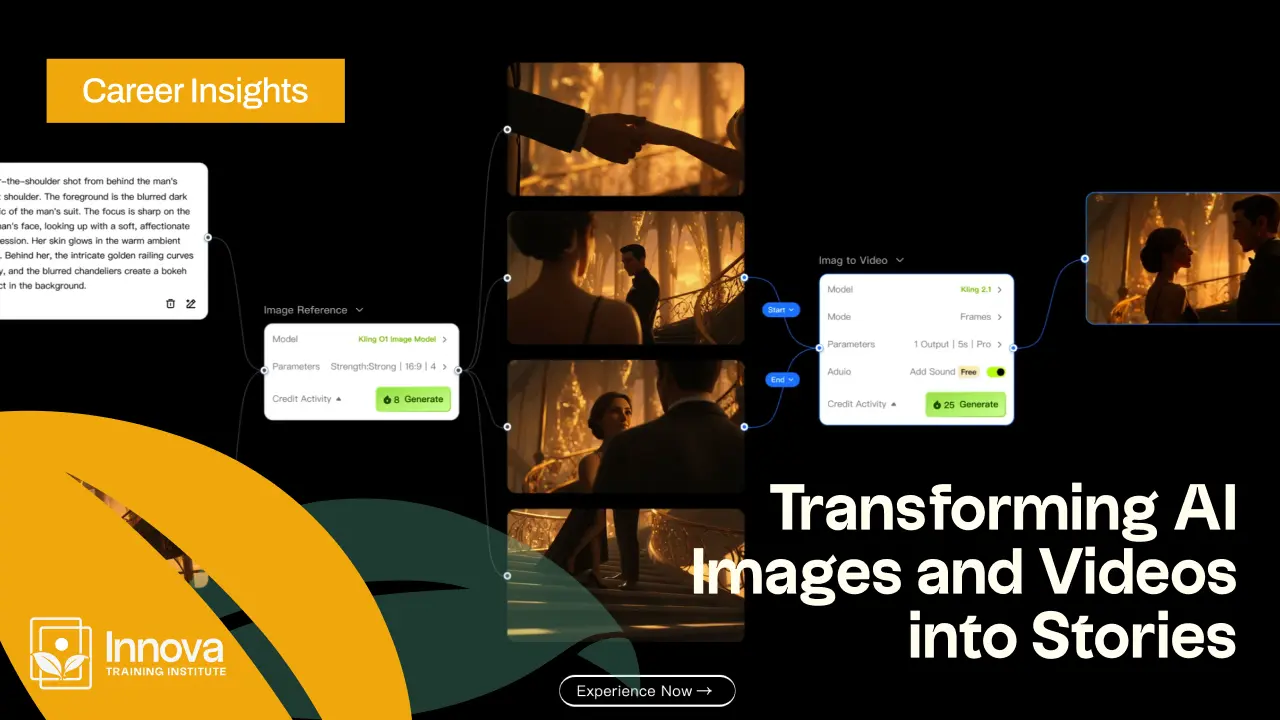
AI can generate images and videos, but filmmaking theory turns them into stories.
For learners comparing the Best AI Courses in Dubai, this insight is crucial. The Best AI Multimedia Creation and Cinematic Storytelling Course in Dubai teaches not just how to generate visuals, but how to shape meaning, emotion, and narrative coherence. That is what separates cinematic work from visual noise.