Table of Contents
- Introduction
- The Traditional Degree Model
- The Innova Approach
- Learning by Doing vs Learning by Studying
- Industry Integration and Career Readiness
- The Power of Dual Qualification
- Mentorship and Personalized Learning
- Internship and Placement Advantage
- Which Path is Right for You?
- Conclusion
Introduction
For decades, traditional degrees have been the default pathway to career success. Universities have long focused on theoretical knowledge, structured curricula, and academic progression. However, in today’s fast-evolving world, where industries are being reshaped by technology, automation, and AI, the expectations from education have changed.
This shift has created space for institutions like Innova Training Institute Dubai, which reimagine education not just as a qualification, but as a direct pathway to career readiness. The difference between Innova and traditional degrees is not just in what you learn, but how you learn, apply, and transition into the real world.

The Traditional Degree Model
Traditional degrees are built on academic depth. Students spend years studying theories, frameworks, and concepts, often with limited exposure to how these ideas function in real-world business environments.
While this model builds foundational knowledge, it often delays practical exposure. Internships, if included, usually come later in the program, and industry interaction remains limited. As a result, many graduates find themselves qualified on paper but underprepared for actual job roles.
The Innova Approach
Innova flips this model by prioritizing application from day one. Instead of separating learning and doing, it integrates both into a single journey.
Programs at Innova are designed around real-world outcomes. Students engage with live projects, case studies, and practical assignments that mirror actual industry challenges. The goal is simple: ensure that by the time a student completes the program, they are not just knowledgeable, but capable.

Learning by Doing vs Learning by Studying
One of the most significant differences lies in the learning methodology. Traditional education leans heavily on lectures, exams, and theoretical assessments. Innova, on the other hand, emphasizes experiential learning.
Students work on capstone projects, simulations, and real business scenarios. Whether it is building AI-powered workflows, creating brand strategies, or analyzing data, the learning process is hands-on and outcome-driven.
This approach not only improves understanding but also builds confidence, problem-solving ability, and practical expertise.
Industry Integration and Career Readiness
In traditional systems, industry exposure is often an add-on. At Innova, it is the foundation.
Courses are designed in alignment with current market demands, incorporating tools, technologies, and workflows used by professionals. Students learn what companies actually use, from project management tools to AI-driven platforms.
More importantly, the curriculum evolves with industry trends, ensuring that students are always learning what is relevant, not outdated.
The Power of Dual Qualification
Another defining factor is Innova’s dual qualification model. Students gain an academic credential along with industry-recognized certifications.
This combination bridges the gap between theory and employability. Instead of graduating with only a degree, students leave with validated skills that employers actively seek. It strengthens both credibility and capability in a competitive job market.
Mentorship and Personalized Learning
Traditional classrooms often operate on a one-size-fits-all approach. Large class sizes limit individual attention, and learning becomes standardized.
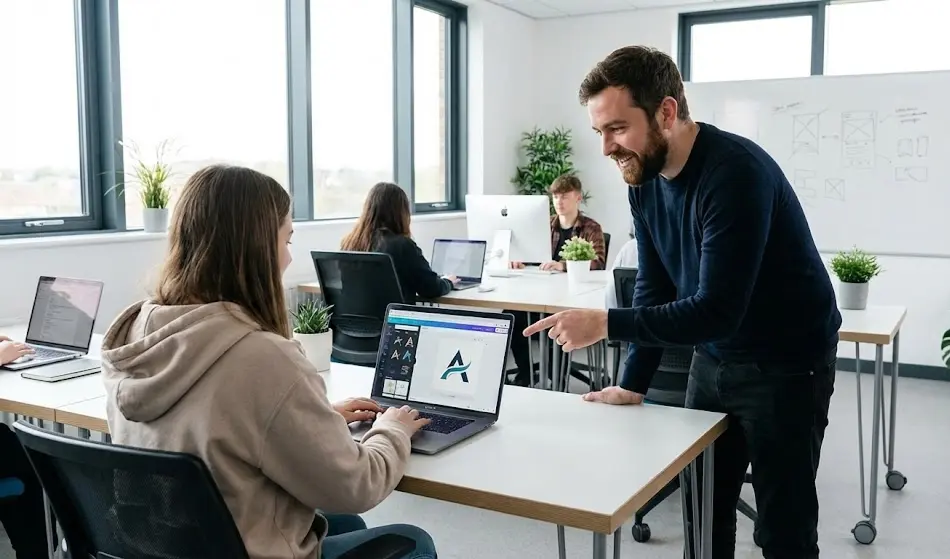
Innova introduces a mentorship-driven model with small groups and personalized guidance. Students interact closely with industry experts who provide insights, feedback, and career direction.
This not only enhances learning outcomes but also helps students understand how to apply their skills strategically in real-world contexts.
Internship and Placement Advantage
Perhaps the most striking difference is the early and guaranteed exposure to work environments.
At Innova, internships begin from the early stages of the program. Students gain hands-on experience while they are still learning, allowing them to connect theory with practice in real time.
Additionally, structured placement pathways ensure that high-performing students transition smoothly into employment. This removes one of the biggest uncertainties associated with traditional degrees: what comes after graduation.
Which Path is Right for You?
The choice between Innova and traditional degrees depends on your goals.
If you value academic depth, research-oriented learning, and a conventional university experience, traditional degrees may suit you. However, if your priority is career readiness, practical skills, and early industry exposure, Innova offers a more aligned pathway.
In a world where skills are becoming as important as qualifications, the ability to apply knowledge is what truly sets professionals apart.

Conclusion
Education is no longer just about earning a degree. It is about building a career.
Innova Training Institute Dubai represents a new model of learning, one that integrates education with execution, theory with application, and knowledge with opportunity. By focusing on real-world skills, mentorship, and industry integration, it prepares students not just to graduate, but to succeed.
As industries continue to evolve, the gap between traditional education and industry expectations will only grow. Choosing the right learning path today can define your career tomorrow.